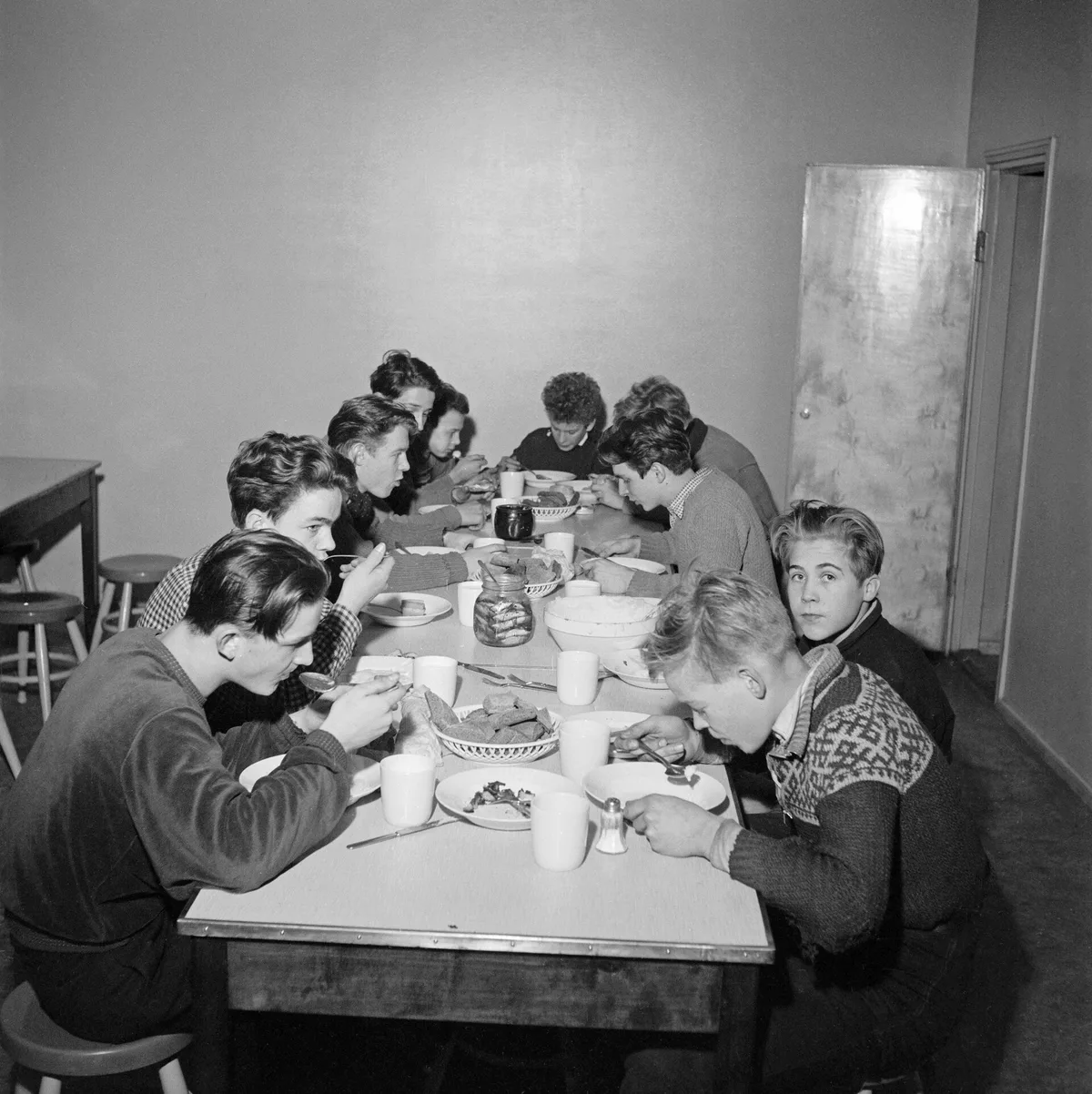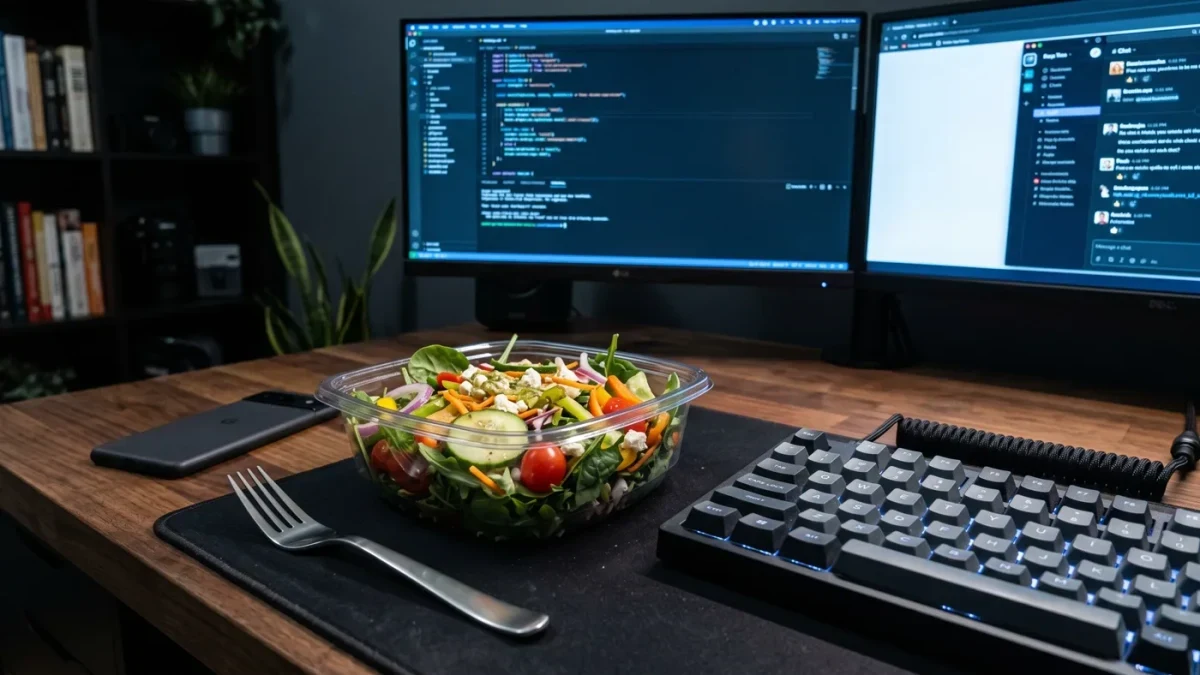
The American lunch break is mostly gone. Survey data collected across the 2010s and 2020s consistently found that fewer than a third of US office workers take an actual break for the midday meal — most eat at their desks, and a meaningful share skip or shorten lunch routinely. Like the decline of workplace friendships, it happened gradually enough to escape policy attention while changing the texture of the workday. The evidence on what it costs arrived before anyone decided it was a problem.
Amjilt News publishes information, not health advice.
What's the evidence lunch broke down?
Repeated surveys, converging. Polling by workplace researchers and benefits firms through the 2010s-2020s — including the often-cited findings that around a fifth of workers eat at their desks every day and many work through lunch entirely — established the desk lunch as the modal American midday. The drivers are legible: video-call calendars that default to the noon hour, hybrid days packed with meetings into every gap, leaner staffing post-restructuring, and a work culture that reads visible eating-at-desk as commitment. The law is no counterweight: US lunch-break requirements are state-level, thin, and lightly enforced for adult workers — only about twenty states require any meal break at all.
What does skipping it cost?
Afternoon performance, mostly. Attention research on vigilance and mental fatigue — a literature reaching back decades and refreshed for knowledge work — documents the predictable afternoon decline and the restorative effect of genuine breaks, especially those spent away from screens or outdoors. Studies of meal breaks specifically, including field research on workplace break-taking published in the 2010s-2020s, associate real breaks with better end-of-day energy and lower burnout scores. The physiology is not subtle: sustained seated screen work degrades focus, and food eaten while answering messages delivers the calories without the restoration. None of this proves a mandated hour would pay for itself; all of it suggests the desk-lunch default has a bill attached that never appears on one.
Why did the office lunch die faster than the office?
Compression again. Pre-pandemic, the lunch break rode on collective rhythm — colleagues moving at noon created permission. Hybrid shattered the rhythm: in-office days are meeting-saturated, remote days lack any collective signal, and the calendar software filled the noon slot because the noon slot was visibly free. Food delivery apps removed the last forcing function, the walk outside. And the social infrastructure that lunch carried — the weak ties, the cross-team conversation — died with it, feeding the workplace friendship problem directly. The lunch break, it turns out, was doing unpaid organizational work too.
What did companies try?
Mixed results, instructive failures. The heavy-handed version — mandatory group lunches, scheduled fun — hit the familiar backlash. The perks version — subsidized cafés — works only where headcount is on-site enough to sustain it, which the hybrid math often breaks. The versions that move the numbers are structural: calendar defaults that block the noon hour company-wide, meeting-free lunch windows written into team norms, and manager modeling, which the survey research consistently identifies as the strongest predictor of whether employees feel entitled to step away. Culture moves when the calendar does; the calendar moves when defaults do.
Is lunch protected anywhere?
Some places, unevenly. Roughly twenty US states mandate meal breaks for adults, with California's thirty-minute rule for shifts over five hours the most enforced template; most countries in the European Union take meal and rest breaks more seriously as a matter of labor law, and the midday break remains culturally intact across much of Europe and Latin America. The US pattern — a legal floor under a minority of workers and a culture eroding the rest — makes lunch a class artifact too: hourly workers in covered states have more enforceable break rights than the salaried professionals who least take them.
FAQ
Are employers required to give lunch breaks?
Federal law doesn't require meal breaks for adults; about twenty states do, California most prominently. Salaried professional workers generally fall outside enforcement regardless.
Does taking a lunch break improve productivity?
Attention research associates genuine away-from-desk breaks with better afternoon performance and lower burnout. The effect is real but modest — the case is that the desk-lunch default has hidden costs, not that an hour off doubles output.