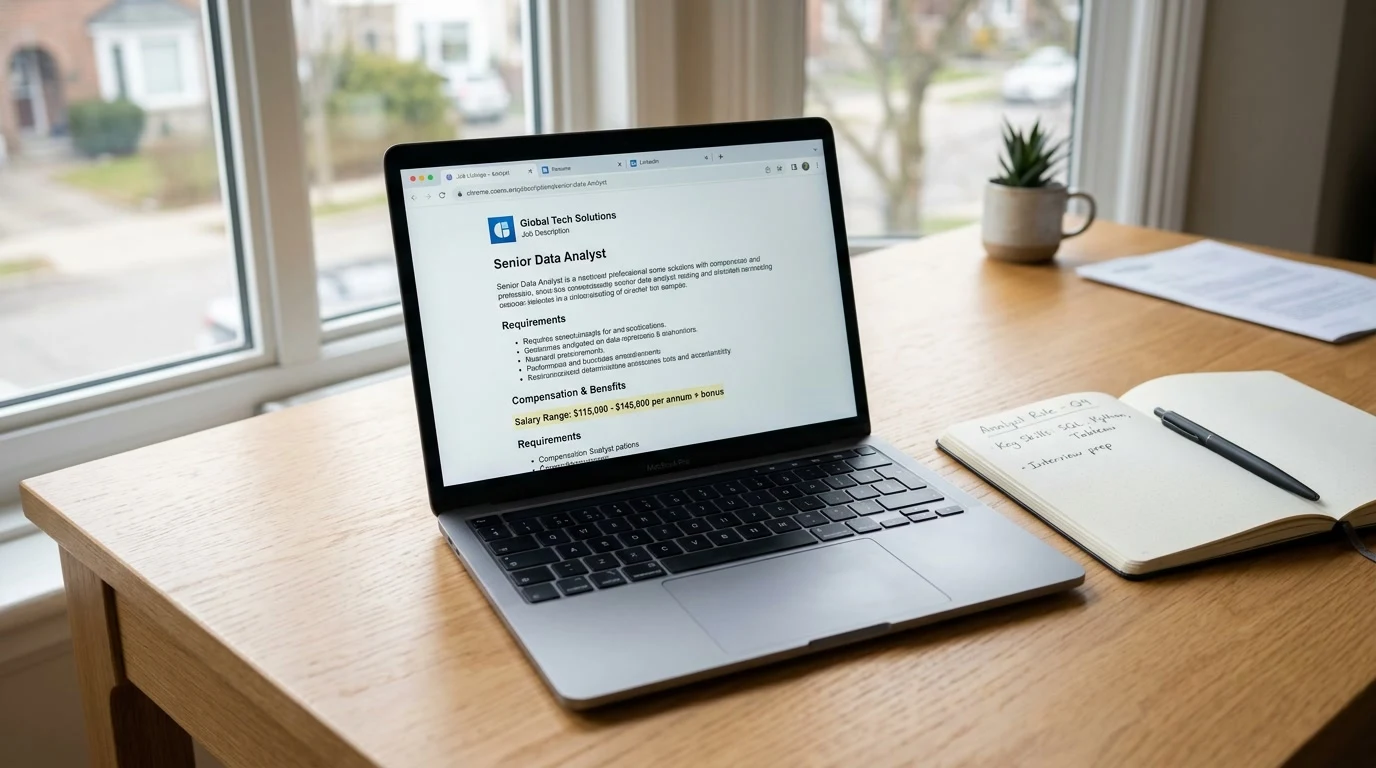
Job postings for positions companies never intended to fill — ghost jobs — drew genuine enforcement for the first time in the mid-2020s. States including New Jersey and Washington passed application-transparency laws taking effect 2025-2026 that require salary ranges and, in Washington's case, disclosure of whether a posting is for an existing opening; platforms rolled out verification badges distinguishing active employers. The catch: most of what frustrated jobseekers call ghost jobs isn't the deliberate deception these laws target, and the deliberate kind was always hard to prove.
Amjilt News publishes information, not legal advice.
What counts as a ghost job, exactly?
The deliberate version: postings with no intention to hire — pipeline collection for future openings, compliance theater for roles already promised internally, or H-1B-required test postings where the outcome is predetermined. That's what survey evidence suggests exists: a much-cited 2024 survey by Resume Builder of over 600 hiring managers found about four in ten companies had posted such listings in the prior year. The innocent versions are far more common: stale postings nobody deleted, roles paused mid-process when budgets moved, and long-running evergreen pipelines for high-turnover positions. Jobseekers experience all of these as ghosts; only some are.
Why do companies post jobs they won't fill?
Mechanical reasons first. Federal immigration rules require labor-certification postings that are real advertisements but predetermined outcomes — a legal requirement, not a scam. Recruiters maintain warm pipelines because positions in high-churn functions reopen constantly; a posting that looks dead may be a queue. And the software bills either way — applicant tracking systems priced per job posting create no deletion incentive, an industry quirk workforce reporters documented repeatedly. The deliberate-scam version — collecting applications to gauge the market or placate an overworked team — is the minority case the survey data still stubbornly shows existing.
What do the new laws actually do?
Two things, both narrower than the headlines. Pay-range mandates, now in more than a dozen states and localities, attack the information asymmetry that makes fake postings cheap — New Jersey's 2025 pay-transparency law took effect June 2025, joining California, Colorado, New York, Washington and others. And posting-integrity provisions, like Washington's amendments effective January 2026, require employers to make reasonable efforts to determine a posted job exists and disclose whether it will be filled — enforceable by state labor agencies with penalties per violation. The design challenge lawmakers acknowledged: enforcement depends on complaints and evidence, and the difference between a paused search and a fake one is invisible from outside.
What did platforms do?
Quietly, more than the laws. LinkedIn and Indeed introduced verification and freshness signals — employer-identity checks, flags for postings inactive past a threshold, and de-indexing of stale listings from search. The economic logic is self-interested: job boards live on jobseeker trust, and the 2024-2025 discourse about fake listings — fed by viral surveys and Reddit forensics — threatened the core product. Platform-level enforcement can move faster than statutes, with the usual caveat that proprietary moderation is opaque; employers report listings removed without explanation, and appeal processes that mostly consist of emailing.
What should a jobseeker actually do?
Read posting age before applying — postings older than 30 days carry materially lower response odds, a finding recruiting-analytics firms publish consistently. Prefer listings with salary ranges (legally required in many states, and a freshness signal everywhere). Apply through the employer's own site where possible, which routes around aggregator lag. And treat silence as data without moralizing it: the modal ghost job is a neglected queue, not a conspiracy, and the response to either is the same — move on faster. The laws will catch the deliberate few; the rest is hygiene.
FAQ
Are ghost jobs illegal?
Increasingly, in targeted ways: Washington's 2026 rules and similar state measures penalize postings for nonexistent openings, and pay-transparency laws raise the cost of fake listings. Proof remains the bottleneck — pausing a search isn't illegal.
How can I spot a ghost job posting?
Check posting age, prefer salary-ranged listings, and apply via the employer's site. Older postings and evergreen pipelines respond at much lower rates, whatever the employer's intent.