The most expensive culture problem of the remote era turned out to be the first ninety days. Employees onboarded remotely during 2020-2024 showed elevated early attrition — Gallup and other engagement researchers documented the pattern, with technology-sector turnover analyses finding remote-hired workers notably likelier to leave within the first year than their in-office-era peers. The diagnosis, once researchers and HR teams looked: distributed hires were completing paperwork and compliance modules while missing the social integration that used to arrive by accident. The fixes that worked rebuilt that arrival on purpose, as ritual.
Amjilt News publishes information, not management advice.
What broke in remote onboarding?
The informal curriculum. Pre-2020 onboarding ran on a hidden syllabus: overhearing how decisions get made, learning who to ask by watching who gets asked, absorbing norms from the room. Remote hires received the formal curriculum — accounts, trainings, a welcome call — and none of the hidden one, then spent months reverse-engineering the culture from Slack channels. The measurable consequences documented across onboarding research: slower time-to-productivity, weaker internal networks (new hires' connection counts ran well below in-office cohorts), and the early-quits pattern that made recruiting costs recur. Managers, already meeting-saturated, treated onboarding as complete when access worked.
What did the rebuilds actually install?
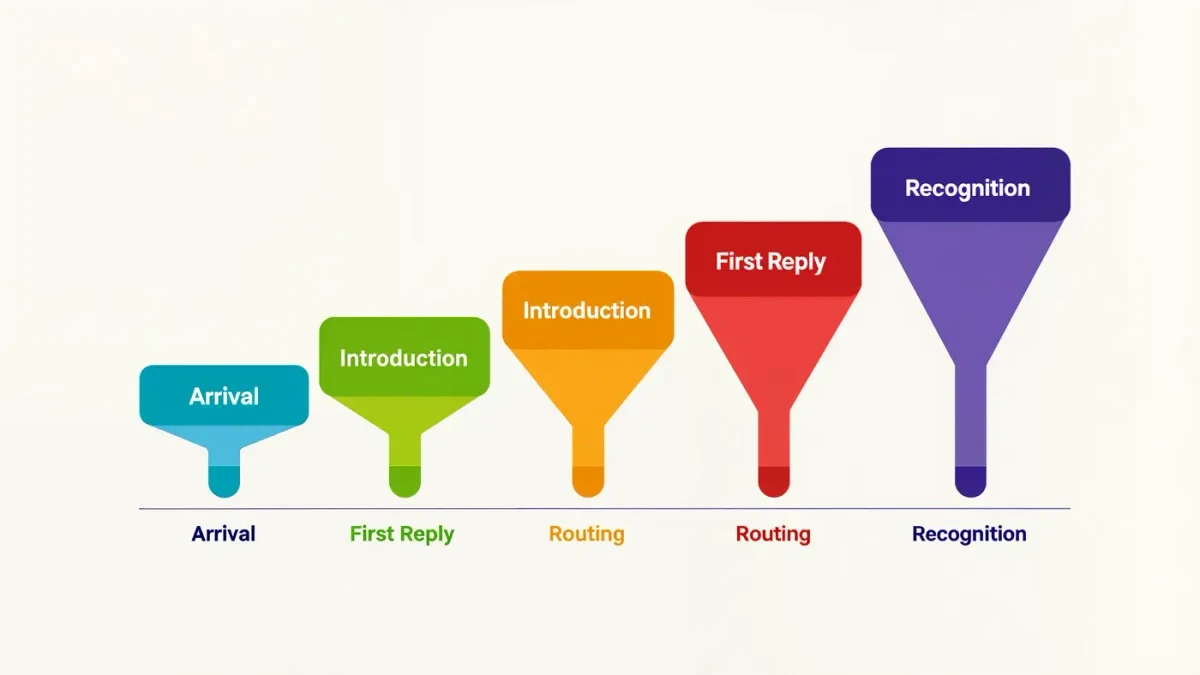
Structures with names and schedules. Cohort starts — beginning groups of new hires together, weekly or biweekly — so the peer cohort forms regardless of location; the practice spread because it manufactures the friendships the friendship data says hybrid work stopped making. Onboarding buddies with defined duration and recognition, distinct from the manager, answering the questions people don't escalate. Structured introduction circuits: a first-two-weeks calendar of short calls with named colleagues covering the org's functions, booked before day one. And the manager rituals that separated good programs from paperwork: twice-weekly first-month check-ins with explicit feedback invitations, and a ninety-day review treated as the real end of onboarding rather than a formality.
What role does the office play now?
Optional accelerator, when used deliberately. Several companies converged on the same pattern for distributed hires: fly the cohort in for an onboarding week — the deliberate version of the serendipity offices used to provide free — which travel budgets can sustain precisely because it's occasional. The documented effect in HR case studies: cohorts that meet physically once in the first month report stronger ties and faster ramp, with the effect persisting after they disperse. The failure mode is expecting the office week to substitute for structure: one week of serendipity followed by ninety days of silence loses to ninety days of structure without any serendipity, in the retention data as in intuition.
Does AI change any of this?
The administrative layer, yes — and the early-2020s tooling wave delivered it: knowledge bases with search that answers the questions new hires used to ask humans, generated first-week documentation, translation and summarization for global cohorts. The consistent warning from the practitioners who deployed it: automating answers automates the easy half. The connections, the context, the sense of being welcomed into something — the components the attrition data actually tracks — remain human-schedule work, which is why the AI era's best onboarding programs use the time saved on paperwork to buy more of the human calendar. The tooling is a budget reallocation, not a solution.
What's the honest ROI case?
Attrition arithmetic, which is why the CFOs approved it. Replacing an early-tenure employee costs a large fraction of salary — recruiting-industry estimates typically run tens of thousands of dollars per knowledge-worker replacement, before counting the manager time and the team's productivity dip. Onboarding programs are cheap by comparison: a buddy program is recognition budget, cohorts are scheduling, the intro circuit is a few hundred calendar hours amortized across the year's hires. The companies publishing internal numbers reported early-attrition reductions large enough to pay for the program many times over. Culture, it turned out, had a component with a measurable price tag all along — the first ninety days.
FAQ
How do you onboard remote employees well?
Cohort starts, a named buddy, a booked introduction circuit, frequent early manager check-ins, and a real ninety-day review. Optional: one in-person week to seed the cohort's ties.
Why do remote hires quit early?
Elevated early attrition among remote hires traces to weak social integration and unclear norms — the hidden curriculum offices provided for free. Structured onboarding closes most of the gap.