The founders who scale a brewing business successfully don't treat growth as a bigger version of the garage. They treat it as a second company that happens to share a name. The beer has to stay recognizably the beer. Everything else — the schedule, the team, the margin, the story you tell accounts — changes.
That distinction matters because the garage origin story is mostly myth anyway. Real garages are parking, not production. The Philadelphia Parking Authority lists eleven garages and lots across Center City, and not one of them is where a company got built. The romantic version survives because it compresses a messy beginning into one image. Scaling means un-compressing it, slowly, without breaking the thing customers actually liked.
This piece looks at what usually breaks first when a craft producer grows, what to protect on purpose, and how to tell the difference between scaling the business and diluting the brand. It's information, not a playbook for any specific brewery — every operation's constraints differ.
What does "losing the brand" actually mean?
It rarely means the beer gets worse. It means the beer gets interchangeable. A small producer's identity lives in constraints: the batch size, the local accounts, the label you could design yourself, the owner who answers email. Scale removes constraints one by one, and each removal feels like progress. Then one day the product could be anyone's, and nobody made a single bad decision to get there.
The mechanism is simple. Brand identity is a set of things you chose not to do. Growth is a set of new things you now can do. When nobody writes down the first list, the second list quietly replaces it.
What breaks first when production grows?
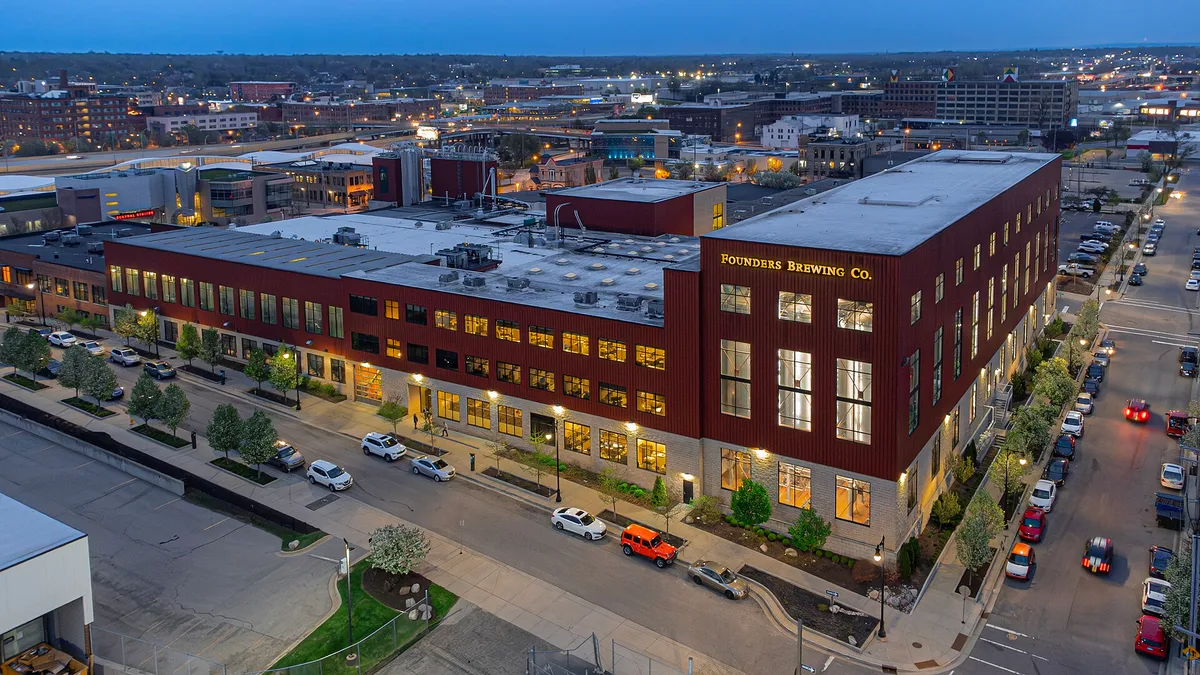
Usually, the recipe-to-customer link. In a garage operation, the founder touches every batch, so quality and voice are the same thing. Once production moves to a facility and a team runs the tanks, the brand lives in documents: specs, style guides, training. Founders who don't write those documents discover that their brand was never a system. It was just them. Readers following this should also see Every founder's contract has a side-project clause. Almost nobody reads it in time..
Distribution breaks next. Selling kegs to the neighborhood bar is a relationship. Selling cases through a distributor is a spreadsheet. Both are legitimate. But the second one pays less per unit, rewards volume over distinctiveness, and gives you almost no feedback from the person pouring the beer. Founders who scale distribution without adjusting the brand's economics end up famous and broke.
Cash breaks third, and it's the quiet one. Production equipment is bought long before the revenue arrives. A brewery can be growing in every visible metric and still be one slow quarter from trouble. This is why experienced operators watch working capital the way fans watch standings — weekly, without sentiment.
What can founders protect on purpose?
Three things survive scaling when you protect them deliberately, and almost never by accident.
- One signature product. Pick the one thing customers would notice if it changed, and freeze it. Everything else can iterate.
- A place in the story. Location is the cheapest brand asset a local producer owns, and it doesn't dilute with volume. A bar understands this instinctively. Garage Rittenhouse, a bar on Spruce Street in Philadelphia that serves beer and cocktails and hosts private events, puts its neighborhood in its own name. The address does work the marketing budget otherwise would.
- The founder's voice, documented. Write down how the brand talks before you hire the person who will write the labels. Otherwise you'll inherit someone else's voice and call it evolution.
None of this requires staying small. It requires deciding, in writing, what growth is not allowed to touch.
How do you scale without the brand going generic?
Our analysis of how craft producers manage this comes down to sequencing, not heroics.
- Fix the recipe documentation before the second site. If the product's identity lives in one person's head, that's the first risk to retire.
- Grow distribution one ring out at a time. Expand only far enough that you can still visit the accounts. Feedback dies at the distance where nobody goes anymore.
- Price for the business you're building, not the one you had. Small-batch pricing doesn't survive wholesale math. Recalculate before the distributor meeting, not after.
- Hire for the brand, train for the tanks. Brewing skills are teachable in months. Taste alignment takes longer, so hire for it.
The founders who skip these steps usually don't fail loudly. They succeed into blandness, which is harder to notice and harder to reverse.
What this means for founders outside brewing
The brewing story is really a manufacturing story, and the pattern repeats in coffee, cosmetics, hot sauce, and furniture. Making a product and managing the organization around it are different jobs, and the transition between them is where most craft companies stall or sell. The brand you built by hand can survive a factory. It can't survive being unattended during the move.
There's also a personal-version risk. As production scales, the founder's public identity becomes a brand asset too, and that cuts both ways — visibility helps sales until the person and the company can't be separated. We've covered that tradeoff before in the founder-influencer playbook and what happens when the platform changes the rules. We covered a connected angle in The founder-influencer playbook pays until the platform does something.
The honest summary: scaling doesn't have to cost you the brand. But the brand you keep is the one you named, priced, and wrote down before the tanks got bigger. Everything else is what the team remembers, and teams turn over.