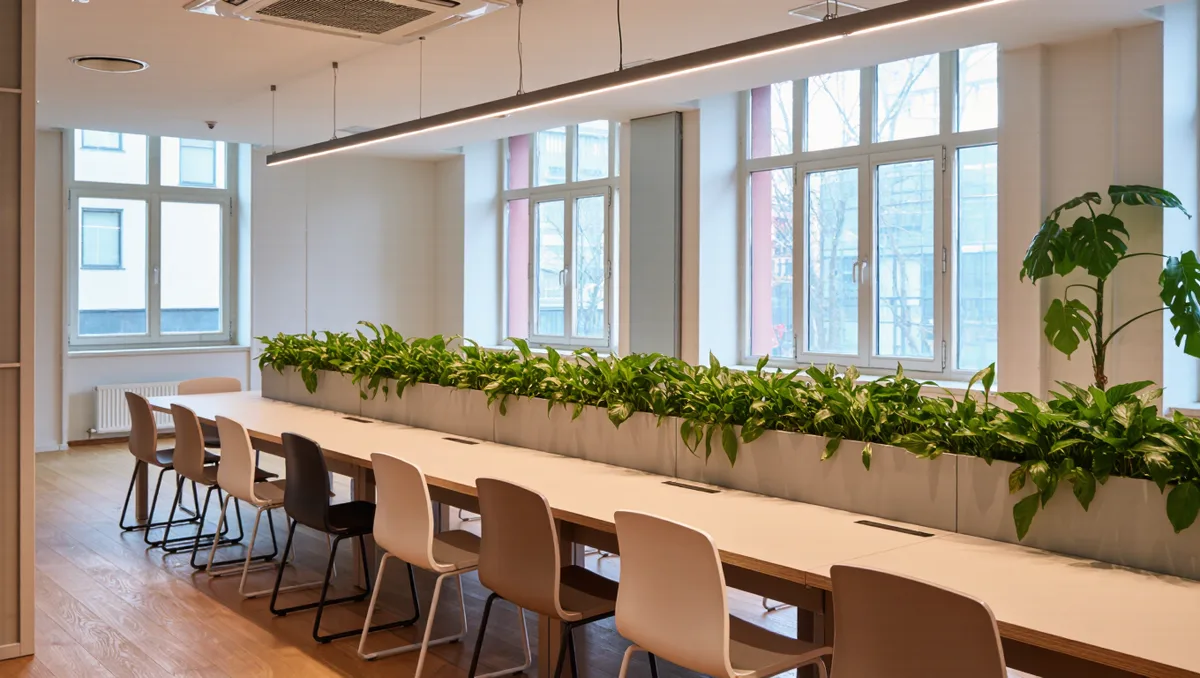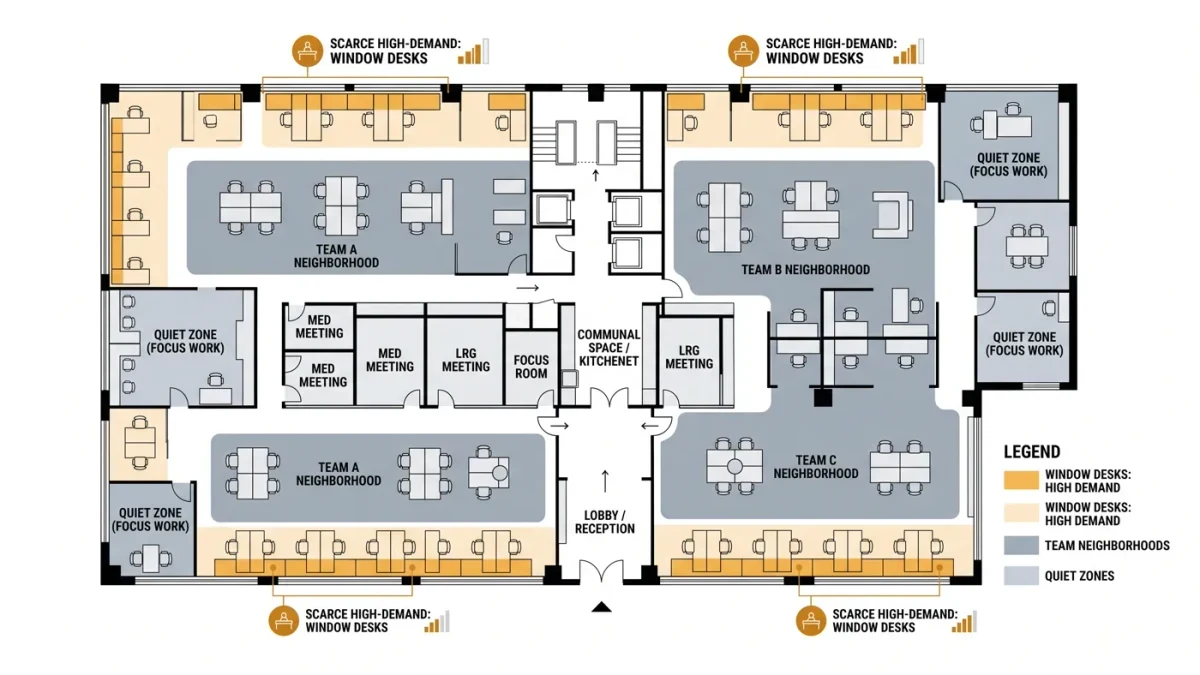
The humblest real-estate decision of the hybrid era — who sits where — turned out to carry status, politics, and a quietly discriminatory edge. As companies shrank their footprints and moved to hoteling (bookable unassigned desks) and neighborhood models (team zones without personal spots), workplace teams discovered what facilities researchers could have told them: seating is an allocation of access — to sunlight, to executives, to the rooms where decisions happen — and employees read it with the attention usually reserved for compensation.
Amjilt News publishes information, not workplace advice.
What are the disputes about?
Three recurring categories, documented in HR complaint patterns and workplace-management case studies through the mid-2020s. Position: proximity to leadership windows and decision rooms functions as an org-chart signal, and teams relegated to interior zones register it as demotion even at identical titles. Amenities: window seats, standing desks, and quiet zones became scarce goods allocated by booking-speed — which advantages the disciplined, the senior, and the early-rising, and frustrates everyone else. And the office-vs-remote tiering problem extended indoors: employees whose roles anchor them on-site (administrative, support, lab) hold fixed desks in the shrunken footprint while the mobile elite books the best remaining spots, a visible reminder of which population the office now serves. The formal org chart says peers; the seat map says otherwise, and people believe the map.
Does seating actually affect careers?
The proximity-bias research says it can. The classical findings on physical distance and influence — the same tradition that documented remote meeting participants' disadvantage — apply to interiors: face time with decision-makers correlates with visibility, assignment flow, and promotion at similar measured output. Hybrid concentrated the effect: fewer shared days mean each desk-day's incidental exposure carries more weight, so a team permanently assigned away from leadership loses more per week than the same assignment cost in 2019. Workplace strategists' honest advice through 2024-2026: treat seat assignments as an equity surface — audit them annually the way pay gets audited, because drift accumulates quietly.
What went wrong with hoteling specifically?
Its neutrality was oversold. Bookable-desk systems assumed employees with equal information and speed competing for identical spots — but desks aren't identical (location, light, neighbors), information isn't equal (executive assistants see the patterns), and booking discipline varies with life circumstances in ways that correlate with seniority and caregiving loads. The documented failure mode: prime desks accumulate to a booking-savvy minority, resentment accumulates to everyone else, and the company saves real-estate dollars while paying culture costs nobody budgeted. The fixes that worked were blunt: neighborhood permanence (teams get zones, individuals book within them), seniority-blind prime-desk rotation, and enough quiet capacity that the good seats stop being scarce.
What about ADA and accommodation law?
The compliance layer employers can't negotiate away. Fixed-desk accommodations for disabilities — proximity, ergonomics, lighting, noise — are standard reasonable accommodations under the Americans with Disabilities Act, and hybrid-era flex policies made them more, not less, common: an employee with a mobility or concentration-related accommodation needs a predictable spot in a booking system, which well-run systems support with priority flags. Religious-accommodation and lactation-space requirements add their own fixed-space needs. Workplace-law advisories through the mid-2020s flagged the pattern: companies that treated space policy as pure real estate kept discovering, in complaint form, that it was also employment law.
What's the durable design?
Zones with meaning, scarcity managed deliberately. The workplaces that exited the seat wars did three things: assigned neighborhoods by work pattern rather than hierarchy, protected a minimum of fixed desks for roles and accommodations that need them, and published the allocation logic so the map's politics were at least transparent. The deepest fix is cultural and older than hybrid: distribute access deliberately — rotate which teams sit near leadership, schedule the decision meetings so proximity isn't destiny. The office got smaller. Its politics didn't.
FAQ
Can employers change desk assignments at will?
Generally yes as a policy matter, subject to accommodations required by the ADA and similar laws, collective agreements, and the attrition costs of visibly inequitable allocation.
Does where you sit at work affect promotion?
Proximity-bias research finds face time with decision-makers correlates with visibility and advancement at equal output — an effect hybrid concentrated by reducing shared days.