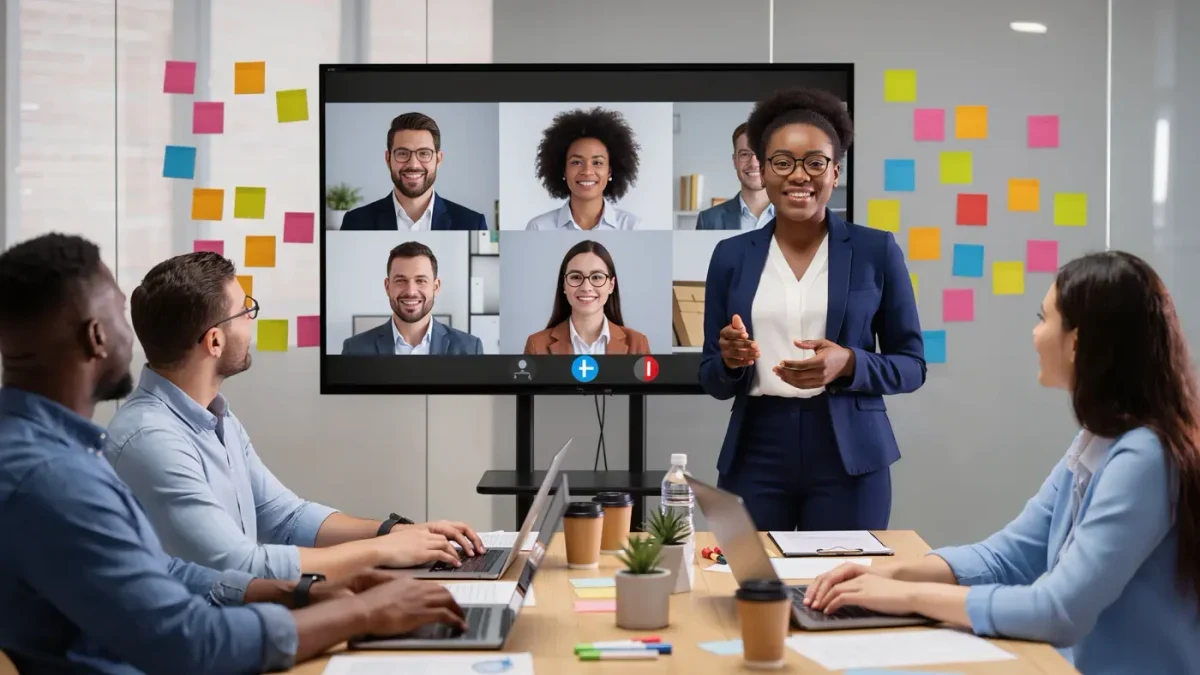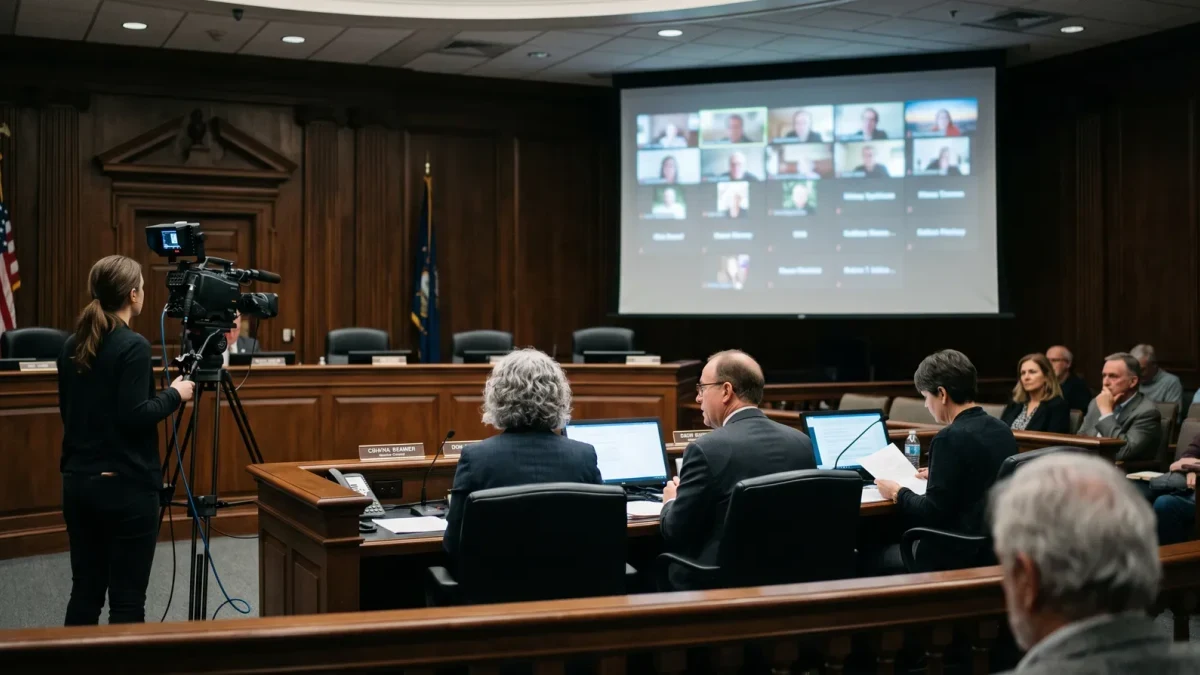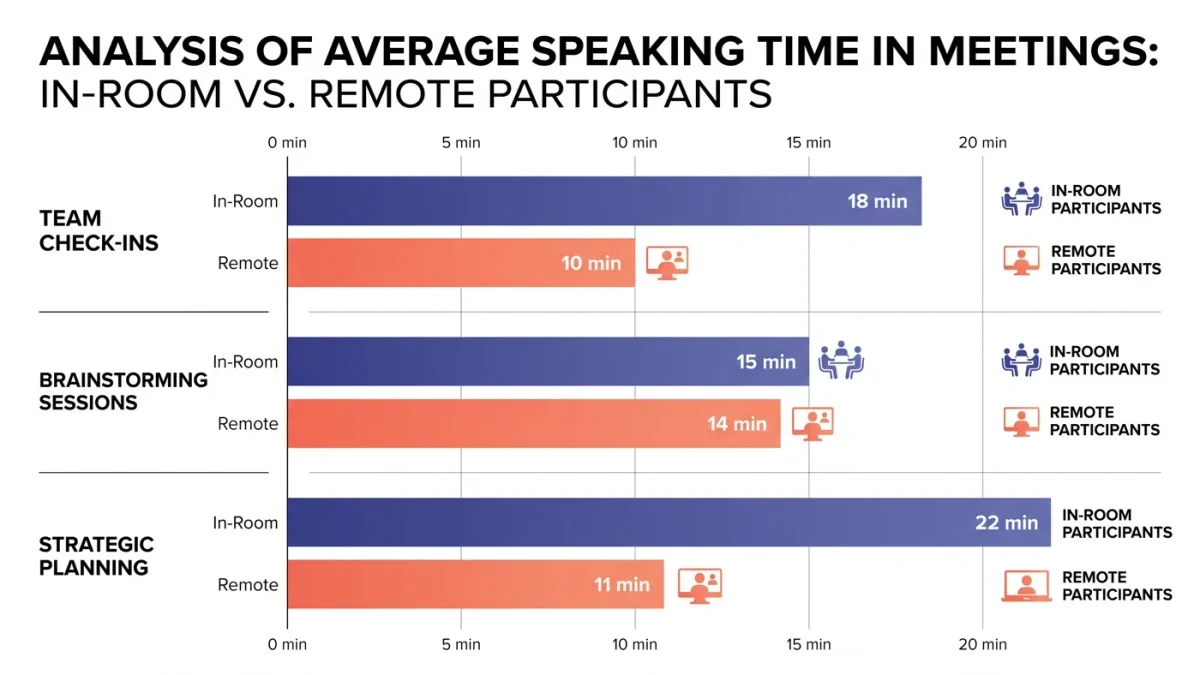
The hybrid meeting's core defect was confirmed by data: people in the room dominate. Studies of mixed-presence meetings — including controlled research published in Nature's portfolio in 2022 finding that remote participants speak less and are perceived as less influential — documented a systematic bias that employees had reported anecdotally since 2020. Companies spent the following years writing meeting rules to compensate, and the ones that succeeded treated it as a design problem, not an etiquette problem.
Amjilt News publishes information, not workplace advice.
What's the actual mechanism of the bias?
Bandwidth asymmetry. In-room participants share a rich channel — glances, side conversations, timing cues — that remote attendees can't access, while remote attendees sit inside a latency-and-interruption gauntlet the room never experiences. The research finding that remote participants speak measurably less tracks a simple cause: by the time their turn arrives via the delay, the room has moved on. Multiply by twenty occurrences per meeting and the remote half of a hybrid team becomes structurally quieter, which participants and observers then misread as disengagement or lack of ideas.
What rules actually fixed it?
Three families, documented across corporate playbooks and workplace-research writeups through 2024-2025. One-to-one device: everyone joins from their own screen, audio on, even the people in the room — the expensive version requires everyone at a desk, the cheap version requires the room to use individual mutes and cameras. Facilitation order: a chair explicitly calls on remote voices first for each topic, making the room respond rather than lead. And artifacts over talk: agendas and decision docs shared before the meeting shift power toward whoever prepared, regardless of location. Companies that adopted all three reported the largest gains in remote-participation metrics; companies that adopted none bought better cameras, which fixed the video and nothing else.
Why did cameras become the battleground?
Because cameras became the proxy war for surveillance versus trust. Camera-mandate policies spread through 2021-2023 as attendance proxies, then retreated under the evidence: research on video-call fatigue, including the Stanford Virtual Human Interaction Lab's work popularized in 2021-2022, documented the cognitive cost of constant self-view and close-range eye contact. The rules that survived the era are narrower — cameras on for small collaborative sessions, optional for large broadcasts, never a performance metric. Where camera tracking entered performance dashboards, it showed up in employee-relations complaints and, in a few documented cases, negotiation with works councils in Europe.
What about asynchronous alternatives?
The strongest rule turned out to be deleting the meeting. Teams that moved status to written updates and reserved live time for genuinely interactive work shrank their hybrid-meeting problem to the subset of meetings that needed real-time presence. Workplace-analytics data through 2025 showed meeting loads rising again as hybrid stabilized — the compression problem again — which made async discipline less a philosophy and more a scheduling necessity. The companies that documented the best hybrid-meeting outcomes were, on inspection, mostly having fewer hybrid meetings.
Does this show up in careers?
It does, which is why the rules matter beyond politeness. Proximity bias — the documented tendency to favor visible, co-located employees in ratings and promotions — links meeting participation to advancement. Survey work through 2024-2025 found remote employees more likely to report being passed over, and managers more likely to describe them as lower contributors, at similar measured output. Structured facilitation and written decision records are the countermeasures: they make contribution legible without the hallway. Companies serious about hybrid equity audit promotion rates by work location the way they audit pay — a practice that went from unusual to expected in HR compliance checklists during the mid-2020s.
FAQ
How do you make hybrid meetings fair to remote attendees?
Everyone joins from their own device, a facilitator calls on remote voices first, and agendas or docs shift weight to preparation. Better room cameras alone don't close the participation gap.
What is proximity bias?
The tendency to rate and promote co-located employees higher at similar output. It's documented in manager-evaluation research and is the main career risk of remote work in hybrid companies.