By the end of 2025, US inflation had spent most of the year near the Federal Reserve's two-percent objective while average hourly earnings kept growing faster than prices — the combination economists call positive real wage growth, and the one workers almost never get in tight-money periods. That's the headline. The fine print matters more: the gains were uneven across industries, and the workers who switched jobs in 2023 and 2024 largely stopped getting the switching premium in 2025.
Amjilt News publishes information, not financial advice.
What happened to prices through 2025?
CPI inflation, which peaked above nine percent in mid-2022, spent 2025 fluctuating around the low twos, per Bureau of Labor Statistics consumer price index releases. The last mile took two years longer than the first ninety percent — a pattern consistent with post-pandemic disinflation in other developed economies. Services prices, especially shelter, were the slowest component to normalize, which kept headline readings bumping even as goods prices stayed flat to deflationary.
What happened to pay?
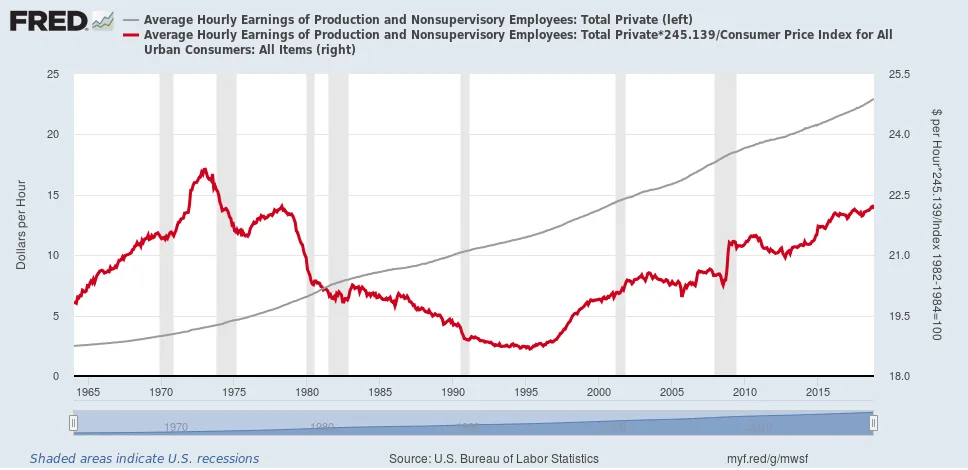
Nominal wage growth held in the roughly three-and-a-half to four percent range across 2025, per the BLS average hourly earnings series — modestly above inflation for most of the year. The Atlanta Fed's wage growth tracker, which follows the same workers over time rather than sampling a changing workforce, told the same story with sharper edges: job switchers' premium over stayers compressed toward historical norms as vacancies declined from their 2022 peak. Translation for the lunch table: raises got smaller but real; the raise from threatening to leave mostly disappeared.
Who gained most?
The wage-compression pattern of 2023 and 2024 largely held. Lower-wage workers in leisure, hospitality, and retail saw the strongest cumulative gains since the pandemic, an outcome researchers at the Federal Reserve Bank of Boston and others documented as the tight labor market bidding up the bottom. Higher-paid knowledge workers saw flatter trajectories, compounded in 2025 by tech-sector restructuring that kept professional-services wage growth restrained even as unemployment stayed low.
Does real wage growth mean people feel better?
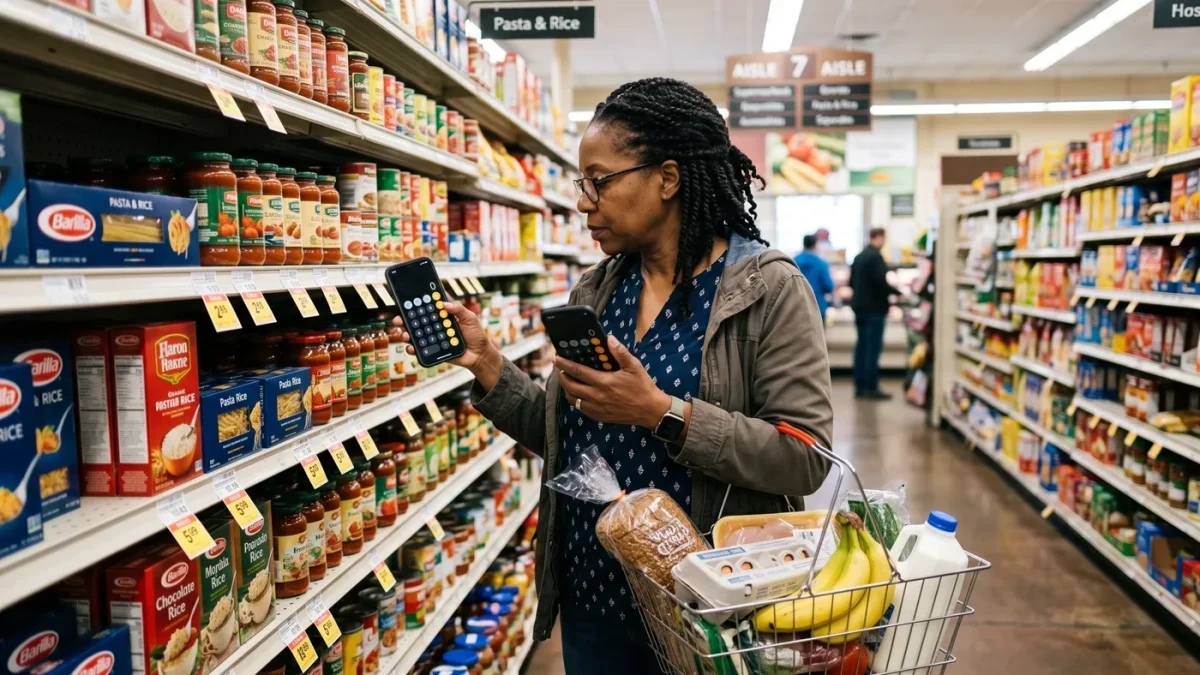
Not automatically, and mostly they didn't. Consumer sentiment surveys through 2025 remained far weaker than the income and employment data would predict — a gap researchers attribute to the price level itself. Disinflation slows price increases; it doesn't restore the price level. A cart that costs twenty percent more than it did in 2021 still costs twenty percent more when inflation hits two percent. Sentiment partially recovered with gas prices and mortgage rates but stayed depressed relative to the objective indicators, a divergence the University of Michigan's long-running survey made unusually visible.
What could break the combination?
Two risks ran through forecasts for 2026. Tariff policy: pass-through of new import duties to consumer prices was the live inflation question entering the year, with the effect concentrated in goods. Labor-market cooling: if openings kept falling, wage growth could slip below inflation and quietly reverse the real gains — the failure mode that damages living standards without ever producing a recession headline. The combination that made 2025 comfortable is not a law of nature; it's a phase.
How should you read the numbers yourself?
Three habits beat any commentary. Compare average hourly earnings growth to CPI for the same month — that difference is the real wage. Watch the Atlanta Fed tracker for the switcher-stayer gap, the single best real-time indicator of worker bargaining power. And when a headline says wages "jumped" or "collapsed," check whether the article is citing a one-month change; the series is noisy enough that single months routinely get oversold in both directions.
FAQ
Are wages still beating inflation?
Through most of 2025, yes: nominal hourly earnings growth ran modestly above CPI. The margin narrowed in months when tariff pass-through pushed prices up.
Why don't real wage gains feel like progress?
Because lower inflation doesn't undo past price increases — the level stays elevated. Real gains feel like recovery only after they've accumulated long enough to rebuild purchasing power.