The tariff-price question got its answer through 2025: import duties did raise consumer prices, measurably but narrowly. The tariff regime expanded sharply in 2025 — across a broad base of imports including steel, aluminum, autos, and wide tranches of Chinese and other goods at elevated rates — while headline CPI inflation rose only modestly. Both facts are in the data, and the reconciliation is where the economics lives: pass-through was real, concentrated in tariff-exposed categories, partially absorbed in margins and supply chains, and spread over quarters rather than weeks.
Amjilt News publishes information, not economic or policy advice.
What does pass-through mean, and what does the evidence say?
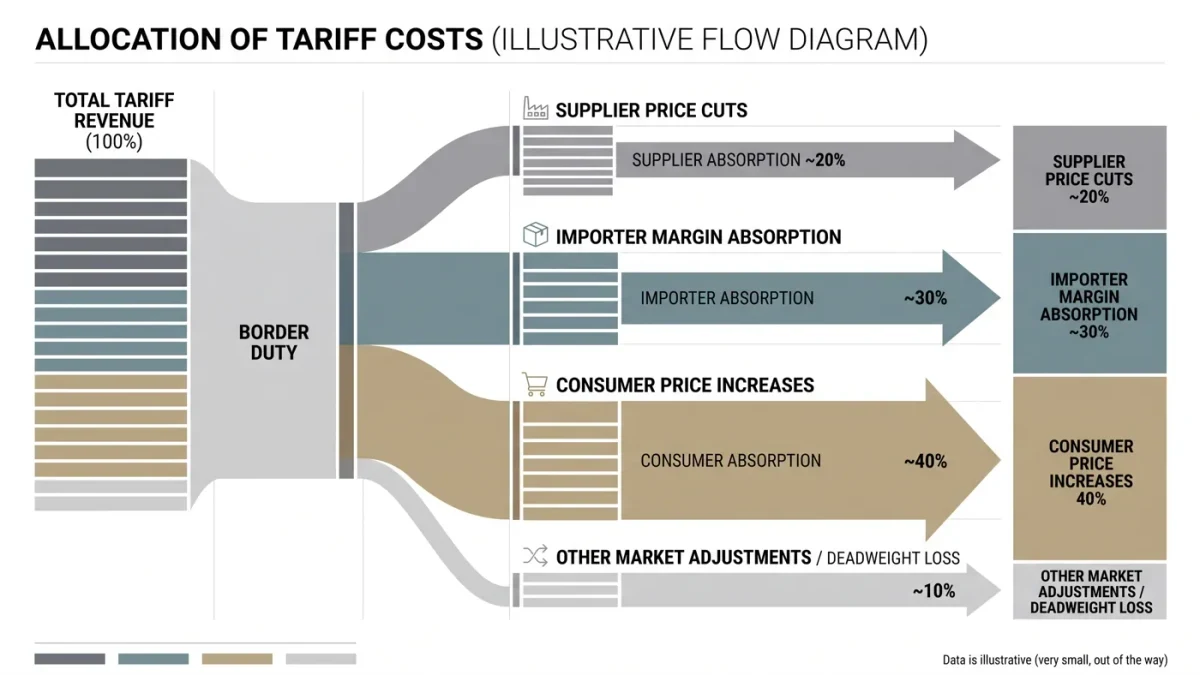
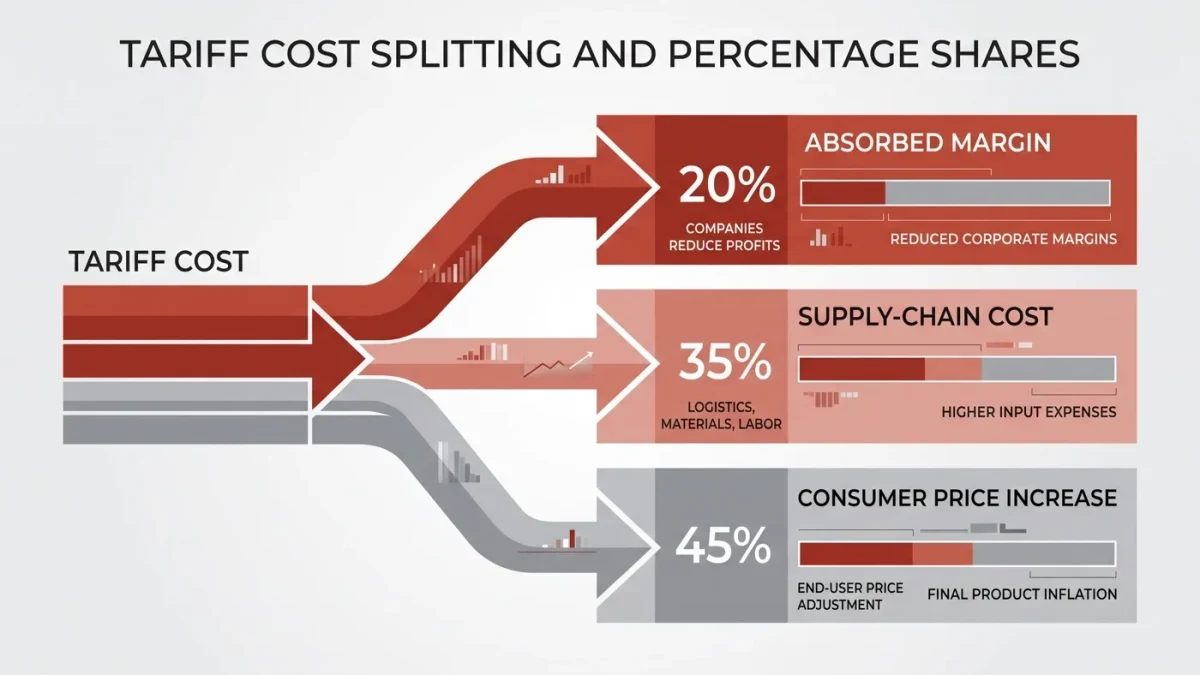
Pass-through is the share of a tariff that lands in the price the consumer pays rather than being absorbed by exporter price cuts, importer margins, or rerouted supply. The literature from the 2018-2019 trade war — including National Bureau of Economic Research studies finding near-complete pass-through to US import prices — established that American importers and consumers, not foreign exporters, bore those tariffs. The 2025 wave's early readings matched the pattern: import price indices for tariffed categories rose; some retailers reported absorbing margins temporarily; and category-level CPI showed tariffed goods — appliances, tools, electronics accessories, toys — outpacing the disinflation in non-tariffed services. The aggregate effect on headline inflation was real but small relative to the tariff base, because tariffed goods are a minority of the consumption basket.
Why was the timing so slow?
Inventories and contracts. Retailers entered 2025 with stockpiles built during the 2024 supply-chain calm — the front-running was itself a documented response to announced tariffs — so pre-tariff goods cleared shelves for months before duty-paid replacements priced in. Wholesale contracts reset on cycles, not announcements. And companies faced a choice the research on the 2018 episode documented precisely: raise prices into a price-sensitive consumer environment, or compress margins and wait. Many compressed first and raised later, which converts a tariff shock into a slow drip of category-level increases — exactly what the 2025-2026 price data showed.
Who actually pays?
The distributional finding is consistent across episodes. Import consumers broadly, and disproportionately lower-income households, because tariffed goods — apparel, toys, household durables — are a larger share of their consumption than of high-income baskets. Domestic producers in protected industries can gain pricing cover; the classic post-2018 finding on washing machines showed domestic manufacturers raising prices in lockstep with the tariff-protected imports. Retaliation imposed its own bill on agricultural exporters, met with federal support payments whose fiscal cost belongs in the same ledger. The honest summary: a tariff is a tax whose incidence lands mostly at home, spread thin in aggregate and concentrated at the category shelf.
What did it do to the economy overall?
Added a drag, not a rupture. GDP arithmetic subtracts imports, which makes tariff-front-running quarters noisy in both directions; investment decisions shifted — some reshoring-adjacent, mostly the nearshoring pattern covered elsewhere — and currency movements partially offset the price effects, as exchange-rate adjustment theory predicts and 2025's dollar path illustrated. Forecasts through 2026 put the level effect on prices at a few tenths of a percentage point to above one point depending on assumptions, with the Fed watching whether tariff pass-through fed inflation expectations — the variable that turns a one-time price-level shift into a persistent inflation problem. That watch continued as of mid-2026.
How to read the next tariff headline
Three filters. Check the category, not the CPI: tariff effects live in specific goods, visible months before aggregates move. Distinguish price level from inflation rate: a tariff shifts the level once; only expectations make it a rate. And watch import price indices — the Labor Department's import price series and the customs data — where pass-through shows up first and cleanest. The 2025 episode taught the lesson economists kept re-teaching: tariffs are a real tax with real prices attached, arriving on a schedule set by inventory turns, not by press releases.
FAQ
Do tariffs cause inflation?
They raise the price level of tariffed goods, typically with high pass-through to import prices. Whether that becomes persistent inflation depends on whether expectations respond — the 2025 episode produced category-level increases without, so far, an expectations spiral.
Who pays for tariffs?
Mostly domestic importers and consumers, per NBER evidence from 2018-2019; the burden skews toward lower-income households because tariffed goods weigh more in their baskets.