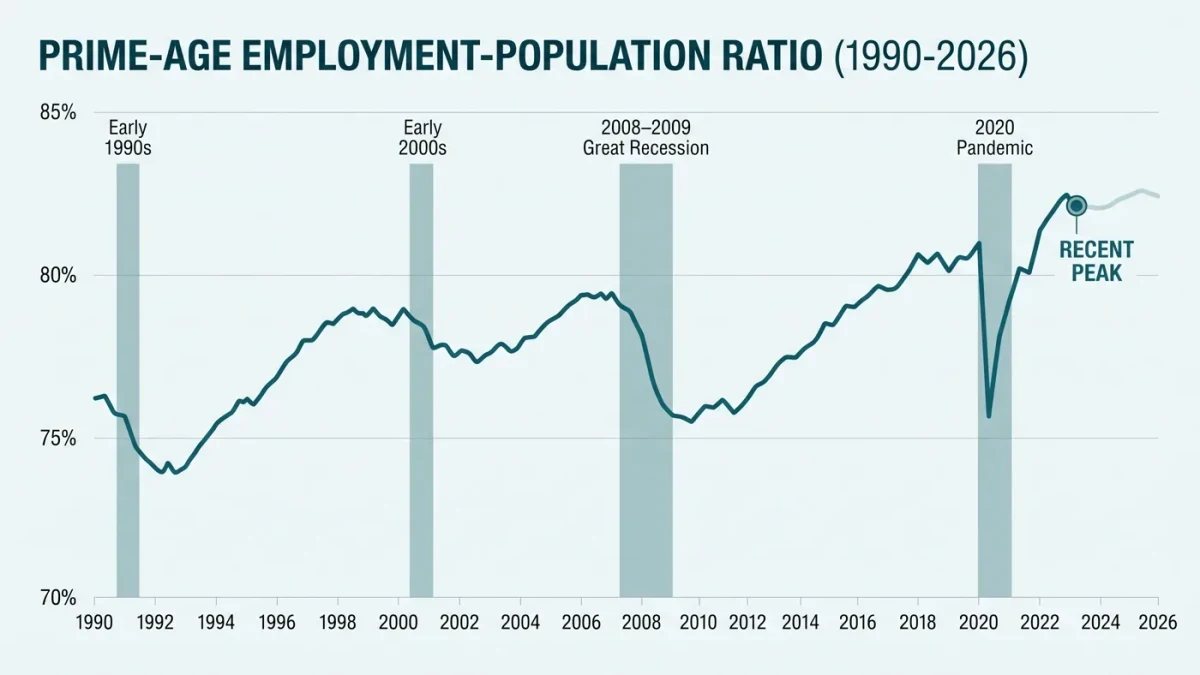
The single most informative number in the mid-2020s labor market isn't the unemployment rate. It's the prime-age employment rate: the share of workers aged 25 to 54 who have jobs. That measure ran at or near its multi-decade highs through 2024-2025 — above anything recorded before roughly 2000 — per Bureau of Labor Statistics data. If you want to know whether the labor market is genuinely strong, that's the series to watch, and here's why.
Amjilt News publishes information, not economic advice.
Why prime-age specifically?
Because it strips out the noise. The overall unemployment rate moves with things that have nothing to do with labor demand: students staying in school longer, retirement waves as the population ages, and the counting status of people who want work but aren't actively searching. Ages 25 to 54 — prime working age — largely removes both schooling and retirement. Economists at the Fed and CBO lean on prime-age measures precisely because they're cleaner. And the employment rate (the share with jobs) beats the unemployment rate on one more axis: it counts discouraged workers who stopped searching, whom the unemployment rate makes invisible.
What did the data show through 2025?
A labor market stronger at its core than any headline suggested. Prime-age employment hovered near and occasionally above 80.5 percent — territory last seen around the 2000 peak — and prime-age women's participation set repeated record highs, per BLS series. The story behind the story: the recovery pulled in marginal workers at rates that contradicted the persistent narrative of people not wanting to work. Men's participation recovered more modestly from its long structural decline, a divergence labor economists continued to study rather than resolve.
What drove the gains?
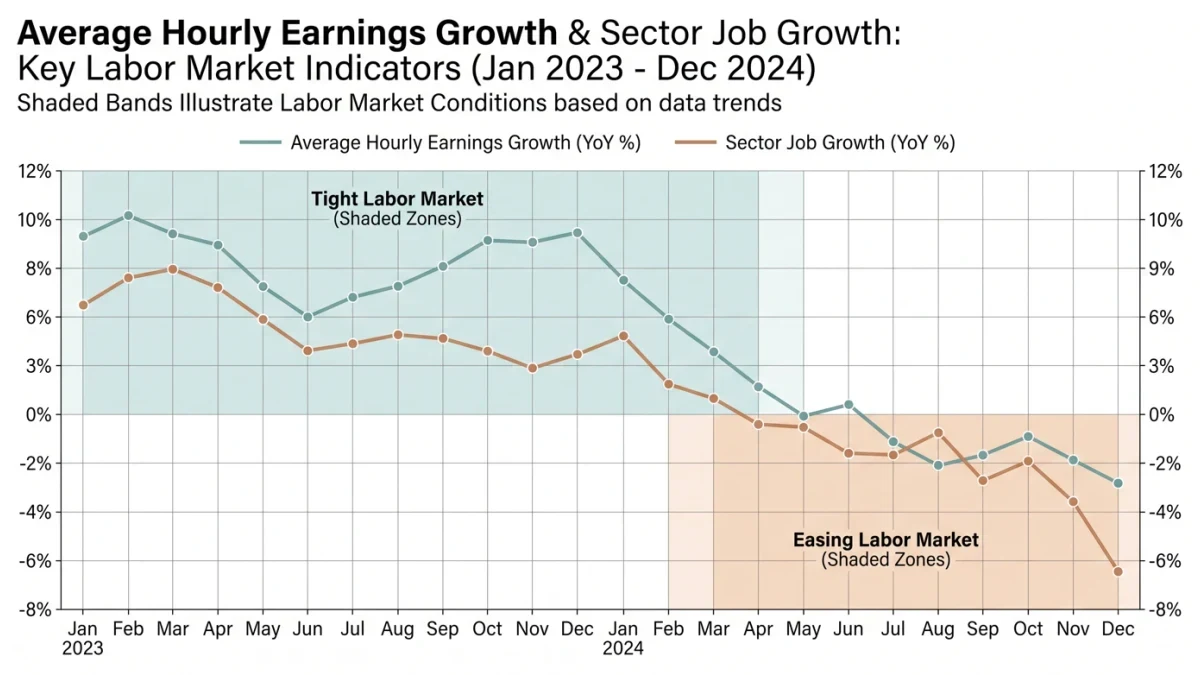
Three forces, all documented. Tight labor markets through 2022-2023 raised wages at the bottom, pulling in workers on the employment margin — the wage-compression research cited earlier in this cycle. Sector composition mattered: care, health, and hospitality expanded. And structural supports quietly changed: child-care availability recovered from its pandemic collapse (unevenly and expensively), remote work reduced the friction of employment for caregivers and people with disabilities — disability employment also ran at record shares through 2025, a shift researchers linked substantially to remote-capable job designs.
What can the number miss?
Quality and hours. An employment rate counts a 20-hour week the same as a 60-hour one, so the involuntary-part-time share — BLS's U-6 measure — is its necessary companion. Composition matters too: high employment in low-wage work is a different economy from high employment overall, which is why analysts pair the rate with median wage data. And the prime-age lens says nothing about the young: entry-level workers, whose post-pandemic employment lagged prime-age workers noticeably through 2024-2025, a gap AI-displacement concerns kept in the policy conversation.
Why did everyone keep arguing anyway?
Because distribution, again. Aggregates at record highs coexisted with genuine strain in specific places — young graduates, certain white-collar roles post-restructuring, regions tied to distressed industries. A voter answering "is the economy good" answers from their own position, and the prime-age series describes the average of a wide distribution. Both facts held simultaneously through 2025: core labor-market strength at record levels, and real pockets of pain that the average couldn't see.
How to track it yourself
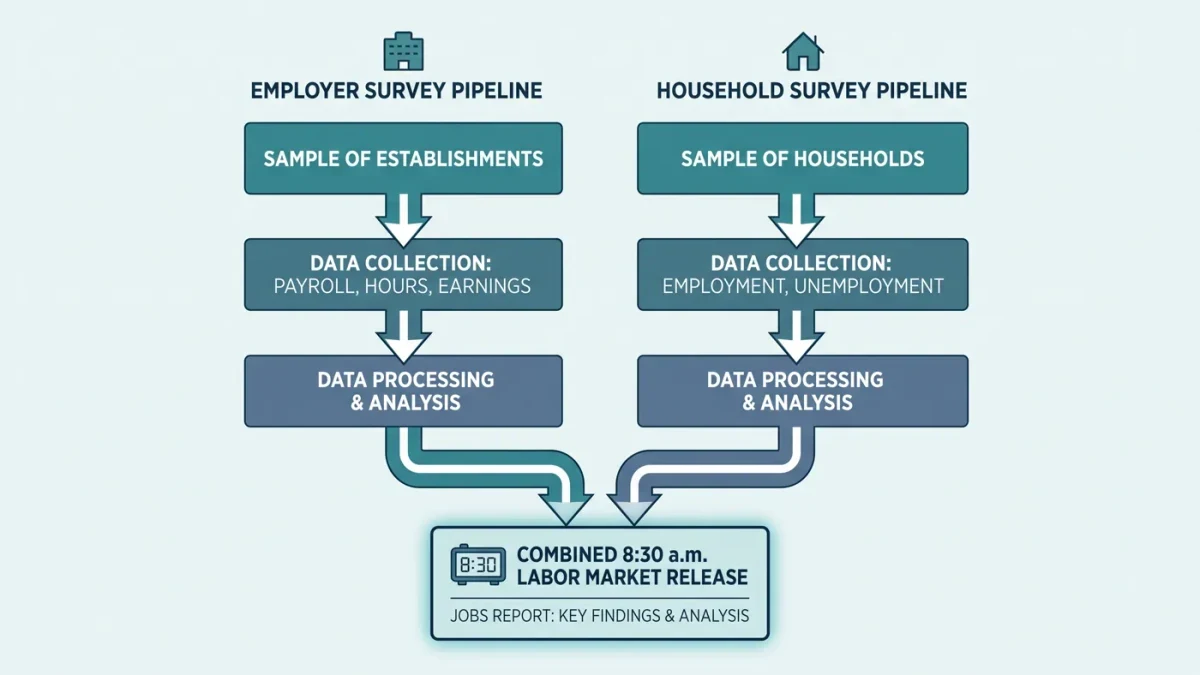
BLS publishes the prime-age employment-population ratio in its monthly employment situation release, and FRED, the St. Louis Fed's database, charts the series back to the 1940s. Watch the trend, not the month — the series is smooth enough that a 0.3 point move is a genuine signal. If it starts sliding while unemployment stays low, believe the slide: employment rates lead unemployment in slowdowns, because people exit search before they register as unemployed.
FAQ
What is prime-age employment?
The share of 25-to-54-year-olds with jobs. It filters out schooling and retirement effects, making it a cleaner read on labor demand than the overall unemployment rate.
Why is prime-age employment at record highs while unemployment rises slightly?
They measure different margins: unemployment captures active searchers, employment captures everyone working. Rising unemployment with high prime-age employment usually means labor supply growing into a still-absorbing market.