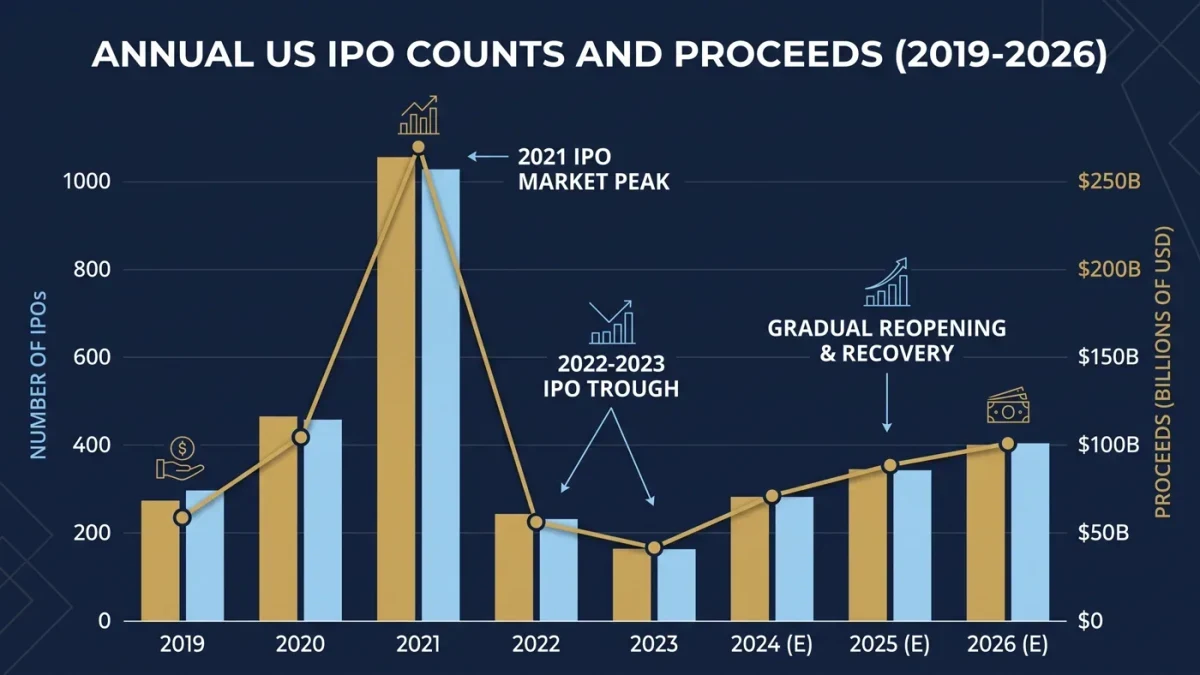
The IPO window reopened in 2024-2026 on a specific set of terms: profitable, established, modestly valued. Exchange data through 2025 showed US listings recovering from 2022-2023's near-freeze — NYSE and Nasdaq reported new listings running well above the drought years — while the pricing discipline that came with the recovery left many of the 2021 vintage still private. The market that returned isn't the market that closed. It wants earnings, and it's paying 2019-style multiples for them.
Amjilt News publishes information, not investment advice.
What changed between 2021 and the reopening?
The buyer. The 2021 IPO boom — a record year by proceeds, with SPACs contributing a large share — priced growth stories to investors chasing zero-rate momentum. The reopening prices cash flows: exchange and deal data through 2025 showed the median newly listed company older, larger in revenue, and more likely profitable at listing than the 2021 cohort. SPACs, which accounted for a majority of 2021 listings by count, essentially vanished — regulatory rulemaking from the SEC in 2024 tightened disclosure and liability for blank-check deals, and the 2021 vintage's post-merger performance supplied the demand-side argument.
Who actually went out?
Fewer, bigger, steadier. The 2024-2025 reopening featured established names across enterprise software, healthcare, and consumer finance, many of them filing after multi-year private builds through the cheap-capital era. Renaissance Capital and comparable IPO analysts described a pattern through 2025: deals priced below the private mark in some high-profile cases — the private-round valuations of 2021 proving unsupportable in public markets — and the aftermarket rewarding the conservative prints. The down-round IPO stopped being an embarrassment and became a category: companies accepting the public market's number to buy liquidity and currency for acquisitions.
Why did the 2021 vintage stay private?
Structure and math. The late-stage private market built instruments — structure-heavy rounds with ratchets and liquidation preferences — that let companies delay the reckoning, and the dual-class-plus-private-liquidity combination meant founders gave up little by waiting. Employees with vested options felt otherwise: secondary markets and tender offers boomed as the private substitute for IPO liquidity, a private-markets evolution documented by the data platforms throughout the period. But the queue of IPO-ready companies — venture investors have described it as the largest ever accumulated, with trillions in private valuations — kept compressing fund lifecycles toward their ten-to-twelve-year limits. The pressure to exit is structural, not cyclical.
What about the AI exception?
The reopening's unevenness mapped neatly onto the AI boom. Companies in the AI supply chain — infrastructure, chips-adjacent, model-layer services — received the 2021 treatment in miniature: premium pricing, strong aftermarket performance, investor appetite undisciplined by current earnings on the thesis that the earnings arrive later. Everything else priced like a value stock. Market analysts through 2025 described the listings market as bifurcated to a degree not seen since the late 1990s: the AI cohort and the everyone-else cohort, with different valuation regimes and different aftermarkets.
What does it mean for the rest of the decade?
A slow drain, not a dam break. The realistic outlook embedded in late-2025 and 2026 banker commentary: a steady monthly cadence of profitable-company listings absorbing the private backlog over years, interest-rate dependent, with the AI cohort supplying the drama. For employees at late-stage startups, the practical reading is to discount illiquid paper value further and watch the secondary market's bid, not the last preferred round's mark. For the exchanges, the recovery is real; for the 2021 mindset, the door it left through is now a different shape.
FAQ
Is the IPO market open in 2026?
Yes, selectively: listings recovered well above the 2022-2023 freeze, but favor profitable, mature companies and AI-supply-chain names priced at disciplined multiples.
Why are startups staying private longer?
Late-stage private capital, structured rounds, secondary liquidity for employees, and public-market pricing that often sits below 2021 private marks make waiting rational — though fund lifespans push toward eventual exits.