The market that decides most business owners' exits isn't the one on the front page. Middle-market deals — transactions roughly between 10 million and a billion dollars — account for the overwhelming majority of US M&A activity by count, several trillion in annual value across thousands of transactions, per the industry trackers' tallies of completed deals. Through 2025 and into 2026, this market recovered from the 2022-2023 rate-shock freeze on the same pattern as the IPO market: selectively, cautiously, and on terms that shifted power toward buyers with cash.
Amjilt News publishes information, not investment or M&A advice.
What does the middle-market recovery look like?
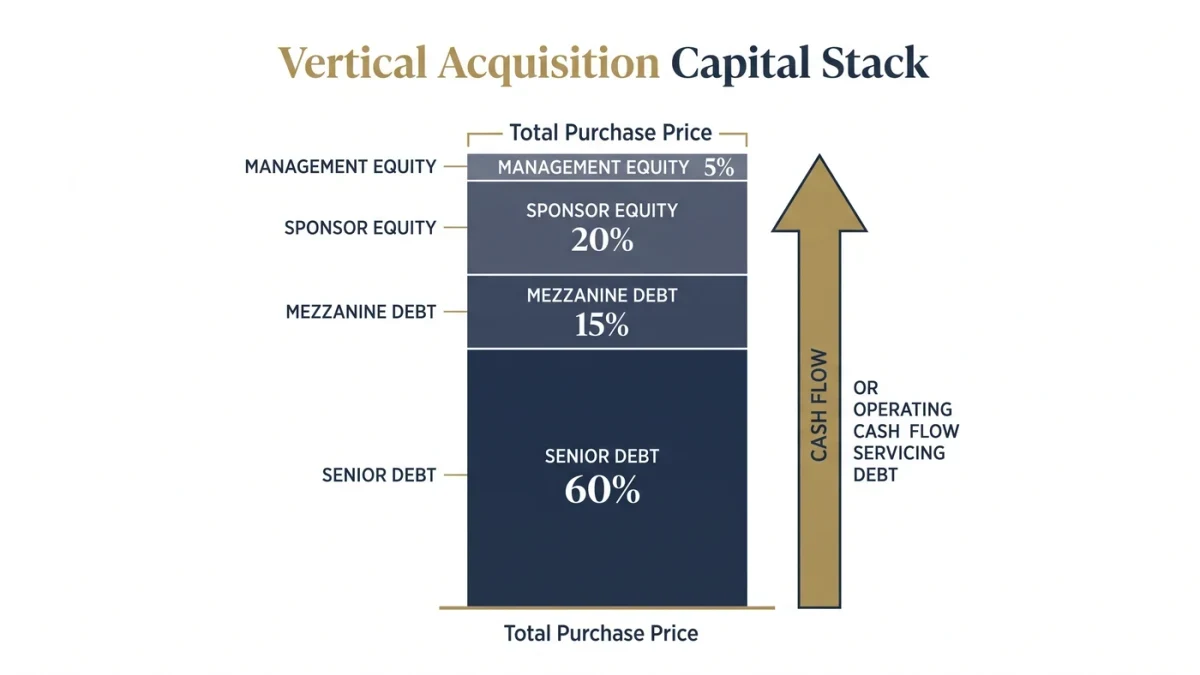
Volume back, structure changed. Deal counts and values climbed from the 2023 trough through 2024-2026, led by the sectors carrying the cycle — technology services riding AI budgets, healthcare consolidation, and industrials benefiting from the nearshoring buildout. But the composition tilted: private equity, sitting on record levels of committed but unspent capital, returned as the marginal buyer while contributing more equity per deal than the leveraged era's norms — the debt math having repriced. Strategic buyers, cash-rich corporations, competed selectively. And sellers adjusted expectations: the gap between asking multiples from the cheap-money peak and what buyers would finance closed partly through price, partly through structure.
What replaced some of the debt?
Creativity, with familiar names. Seller notes — the owner financing part of the purchase — became materially more common in sub-100-million deals, bridging valuation gaps at interest rates buyers could live with. Earnouts, contingent payments tied to performance, spread from their tech habit to healthcare and industrials, shifting risk to the seller in exchange for headline value. Private credit funds, the direct-lending sector that grew through the 2020s past the syndicated-loan market in portions of the middle market, supplied the financing banks stepped back from — at spreads that reflected their own fund economics. Deal lawyers' mid-2020s practice advice to sellers became standard: model the earnout as if it pays zero, and read the definitions of the metric it depends on twice.
Who's selling?
Two cohorts, one demographic. The demographic: baby-boomer-owned businesses — a large share of the privately held middle market — continued reaching transition age, supplying the succession-driven sales that exist regardless of the rate cycle; business-brokerage and M&A advisor reporting consistently identified retirement as the leading motive among sellers. The cyclical: owners who held through the 2023 freeze waiting for the pricing they'd been promised, some concluding through 2025-2026 that the window they wanted had become the window there is. Both cohorts met a buyer pool with disciplined underwriting and a realistic cost of capital — a market clearing at multiples below the 2021 prints, with more paper structure in the middle.
What should a seller actually check?
The quality-of-earnings work before the buyer does it. Middle-market deals live and die on due diligence, and the sellers who cleared best had: clean books reconciled to tax returns, customer concentration understood and narrated, and — increasingly decisive — a management team that stays. The recurring mid-decade buyer question, per advisor reporting: does this business depend on the owner, and what happens when the owner leaves? Businesses that answered well commanded the premium in a buyer's market; the ones that couldn't sold at discounts or became earnout laboratories.
Where does this go?
The overhang points one direction. Private equity's invested-capital deadline — funds whose holding periods extended past their intended life during the freeze — plus the retirement demographic plus stabilizing rates imply a multi-year pipeline of sell-side pressure, which pricing dynamics suggest arrives gradually rather than in a rush. The middle market will clear it the way it clears everything: quietly, in thousands of deals a year, mostly beneath anyone's front page.
FAQ
Is 2026 a good time to sell a middle-market business?
Volume recovered and buyers are active, but pricing sits below 2021 multiples with more structure — seller notes and earnouts — bridging gaps. Demographics make the timing question personal as much as market-driven.
What is private credit's role in middle-market deals?
Direct lenders now supply much of the financing banks once syndicated, at spreads reflecting fund economics. Their return made leveraged deals workable in a higher-rate world, with more equity contributed per deal.